

Chemical peels have come a long way.
Today, alpha- and beta-hydroxy acids can be found throughout mainstream skincare—in cleansers, toners, serums, pads and exfoliating treatments. These products have introduced millions of people to the benefits of acid-based skincare.
But not all acids—or acid peels—are the same.
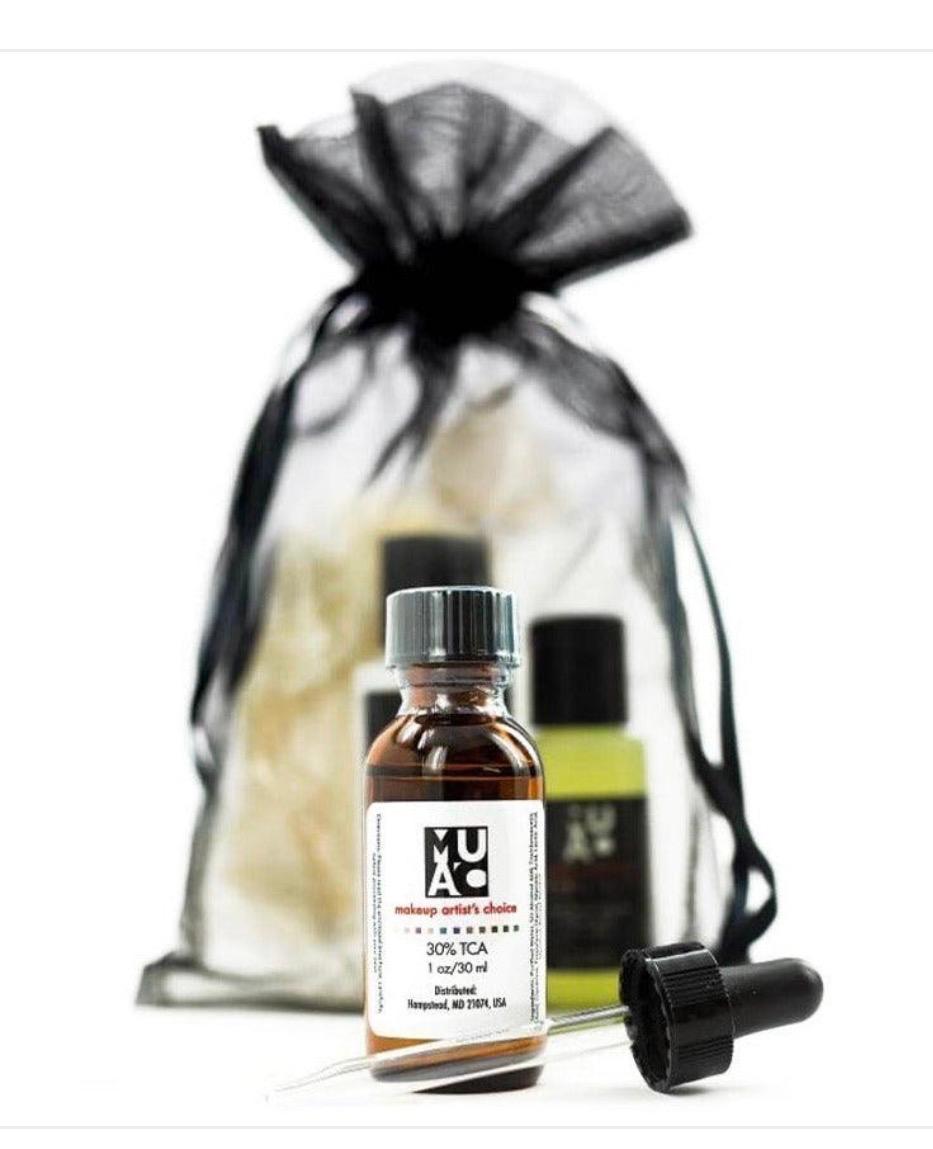
At Makeup Artist’s Choice (MUAC), we have specialized in professional-grade at-home chemical peels since 1997. One of the most important things we have learned during those years is also one of the simplest:
The strongest peel is not necessarily the best peel. The right peel is the one that is appropriate for your skin, your skincare goals and your level of experience.
That philosophy is particularly important when discussing TCA.
↑TCA Peel Guide: Jump to a Section
- What Is a TCA Peel?
- When Alpha-Hydroxy Acids Haven’t Been Enough
- MUAC Pre-Formulated TCA Peels
- MUAC’s 30% TCA Adjustable Peel Kit
- What Does “Adjustable” Mean?
- Preparing Your Skin for a TCA Peel
- Patch Testing Is Essential
- What Is TCA Frosting?
- One Layer or More?
- What Happens After a TCA Peel?
- Hydration and Moisture After TCA
- Protect Freshly Peeled Skin From the Sun
- TCA and Darker Skin Tones
- Not Ready for TCA? You Have Options
- How Often Should You Perform a TCA Peel?
- Who Should Not Use a TCA Peel?
- A TCA Peel Is a Process, Not Just a Product
- Nearly Three Decades of At-Home Peel Education
What Is a TCA Peel?
TCA, or trichloroacetic acid, is a deeper-penetrating acid peel than the alpha- and beta-hydroxy acid peels many at-home peel users are familiar with.
Alpha- and beta-hydroxy acids—including glycolic, lactic, mandelic and salicylic acids—are widely used to exfoliate the skin and improve its appearance. TCA penetrates more deeply into the skin and can provide a more intensive peeling experience.
For that reason, TCA needs to be respected.
It requires proper preparation, careful selection of strength, a patch test, strict adherence to directions and appropriate post-peel care.
TCA is not a beginner peel and should never be used by an inexperienced acid-peel user.
When Alpha-Hydroxy Acids Haven’t Been Enough
Alpha-hydroxy acid peels are excellent choices for many skincare concerns, but everyone’s skin is different.
Some experienced peel users come to TCA after using alpha-hydroxy acids appropriately but finding that those acids haven’t provided the results they were seeking for a particularly stubborn skincare concern.
That does not mean everyone should eventually “graduate” to TCA.
TCA is not simply the next rung on a ladder of increasingly strong acids. It is a different peeling option with different considerations.
At MUAC, when customers contact us individually about TCA, we take the time to dive into their skincare history. Based on that history, we determine whether TCA is an appropriate choice for them.
Sometimes the answer is:
Not yet.
A customer who is inexperienced with acid peels may be better served by beginning with a gentler acid and learning how their skin responds before considering TCA at a later time.
There is no reason to rush.
MUAC Pre-Formulated TCA Peels
For experienced acid-peel users who prefer the convenience of a ready-to-use concentration, MUAC offers pre-formulated TCA peels in:
These eliminate the mixing required with an adjustable peel and allow customers to select an appropriate pre-formulated concentration.
As with all TCA products, customers should read the complete product directions and precautions before use and perform the required patch test.
MUAC’s 30% TCA Adjustable Peel Kit
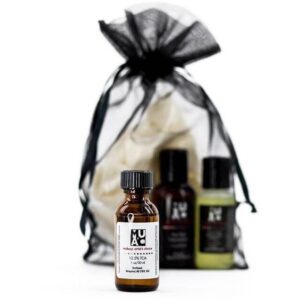
Our 30% TCA Adjustable Peel Kit is MUAC’s best-selling acid peel, and one of the reasons for its longstanding popularity is its versatility.
The word adjustable is important.
The kit allows customers to use MUAC’s recipes to prepare different TCA working strengths:
10%
15%
20%
25%
30%
The purpose of offering a 30% adjustable solution is not to encourage customers to immediately use 30% TCA on their skin.
Quite the opposite.
MUAC instructs customers to begin with the 10% preparation and increase incrementally only when appropriate. Do not skip strengths.
Our directions also specifically caution against using 30% TCA full strength unless 25% has previously been used successfully with absolutely no irritation.
If a lower concentration is providing good results, there may be no reason to increase it.
We have said it for years:
Less is best with acids.
Adjustable Does Not Mean “Use It at Maximum Strength”
This is an important concept that applies beyond TCA.
A concentrated adjustable peel provides flexibility.
For customers who prefer to remain with an alpha-hydroxy acid rather than move into TCA, MUAC also offers a 70% Glycolic Acid Adjustable Peel. It provides the same general advantage of allowing a customer to prepare a lower working concentration rather than assuming the concentrated product must be used at maximum strength.
At MUAC, adjustable means having choices—not pursuing the highest possible percentage.
Preparing Your Skin for a TCA Peel
A successful TCA experience begins before the TCA is applied.
Preparing the skin beforehand can help introduce it gradually to acid use. Depending upon the customer’s needs and previous acid experience, an appropriate alpha-hydroxy acid, beta-hydroxy/salicylic acid or acid serum may be used as part of pre-peel preparation.
For customers concerned primarily with the appearance of pigmentation, MUAC’s Fade Peel and Fade Serum may also be considered as preparation products.
Equally important is knowing when to stop certain products and treatments before your TCA peel.
For 48–72 hours before your peel, discontinue retinoids. Do not use facial scrubs or perform microdermabrasion before your TCA peel. Never apply TCA to sunburned, irritated, sensitized or otherwise compromised skin.
Your skin should be calm and free from irritation before you proceed.
Preparing for TCA isn’t about aggressively exfoliating the skin immediately beforehand. It is about preparing the skin over time and then allowing it to be in a calm, healthy condition when the TCA peel is performed.
Always follow the specific preparation instructions supplied with your MUAC TCA peel.
Patch Testing Is Essential
We cannot overstate the importance of patch testing.
Always perform a patch test and wait 48 hours before proceeding with the complete peel.
Patch test on the area you actually intend to treat. If you’re planning a facial peel, patch test on the face below the ear along the jawline. If you’re treating the hands, patch test the hands. If you’re treating the neck, patch test the neck.
Skin can respond differently on different areas of the body.
A successful patch test isn’t a step to rush through—it is information about how your skin may respond to that particular product and strength.
What Is “Frosting” During a TCA Peel?
People researching TCA frequently encounter the term frosting.
The explanation is actually quite simple.
With MUAC’s TCA peels, particularly at 15% and above, areas of the skin may begin to turn white while the peel is being processed. This whitening is referred to as frosting and is common with TCA peels.
Once frosting begins, it is time to neutralize and remove the peel.
Do not wait for the skin to become increasingly irritated or uncomfortable. Frosting does not necessarily mean the skin will feel severely irritated, and irritation is not something you should wait for before neutralizing.
Use MUAC’s Post Peel Neutralizer according to the directions to deactivate and remove the TCA. If the premixed neutralizer is unavailable, our directions provide a backup neutralizing rinse made with 1 cup of warm water and 2 tablespoons of baking soda.
Never leave TCA on longer in an attempt to produce additional frosting. Once frosting appears, neutralize the peel and proceed with the post-peel instructions.
With TCA, more frosting does not mean better results.
One Layer or More?
First-time TCA users should apply only one layer as directed.
Experienced home TCA users who have already established how their skin responds may find that their directions allow an additional layer. Layering changes the intensity of the peel and should not be approached casually.
Always follow the directions for the specific MUAC TCA product you are using rather than assuming that previous experience with another acid—or another TCA product—applies.
What Happens After a TCA Peel?
TCA requires patience.
Visible peeling does not necessarily begin immediately. With MUAC TCA peels, peeling commonly begins around the fourth day and can continue in varying degrees over the following days.
Allow approximately 10 days before assessing the complete results of your peel.
Most importantly:
DO NOT PICK OR SCRATCH PEELING SKIN.
Allow it to shed naturally.
Picking or pulling peeling skin can damage freshly processed skin and may contribute to irritation or scarring.
This is one of those situations where doing less is genuinely doing more for your skin.
Hydration and Moisture Matter
There is a persistent belief that skin should be allowed to become extremely dry after a peel because moisturizer may make visible peeling less obvious.
We don’t recommend deliberately making yourself uncomfortable simply to see more peeling.
Freshly peeled skin can feel dry, tight or itchy. Excessive dryness may tempt you to scratch—sometimes even while sleeping—which is precisely what we want to avoid.
During the initial post-peel period, follow the moisturizing instructions supplied with your TCA peel.
As the skin progresses through recovery, appropriate hydration can help keep it comfortable. MUAC’s Advanced Hyaluronic Serum is an excellent option for deeper hydration once appropriate according to your post-peel directions. Customers with naturally oilier skin who need lighter moisture may prefer our Green Tea Pomegranate Moisturizer.
Remember: visible peeling is not the only measure of whether a peel has worked.
Protect Freshly Peeled Skin From the Sun
Sun protection is essential following a TCA peel.
Avoid unnecessary sun exposure while the skin is peeling and recovering, and use a broad-spectrum SPF 30 or higher when going outdoors.
Freshly peeled skin requires protection. This is not an optional part of post-peel care.
Also avoid swimming in chlorinated pools or ocean water while the skin is actively recovering, and don’t resume potentially irritating skincare products until the recovery period described in your product directions has passed.
What About TCA for Darker Skin Tones?
This deserves special consideration.
TCA can cause temporary darkening during the peeling process, and some darker skin tones may be more susceptible to developing areas of uneven pigmentation following a TCA peel.
For that reason, someone with a darker skin tone whose primary goal is addressing the appearance of pigmentation should not automatically assume TCA is the best starting point.
MUAC often recommends beginning with Mandelic Acid for customers seeking a peel for pigmentation concerns, particularly when a gentler approach is appropriate.
Our Mandelic Acid peels exfoliate without requiring the customer to immediately move into the deeper-penetrating TCA category.
Again, the goal is not to choose the strongest acid.
The goal is to choose the appropriate acid.
Not Ready for TCA? You Have Options.
One advantage of MUAC’s extensive acid and skincare collection is that we have no reason to push every customer toward one particular class of acids.
TCA isn’t appropriate for everyone—and it doesn’t need to be.
Some customers may do beautifully with mandelic, glycolic, lactic or salicylic acid. Others may benefit from targeted skincare products rather than a peel.
For example, our Gly-Luronic Miracle Correction Serum combines 15% glycolic acid with hyaluronic acid in a leave-on formulation. We sometimes think of products like this as helping to bridge the gap between where everyday skincare ends and peels begin—providing ongoing exfoliation while also delivering hydration.
For customers who simply don’t want to use acids on their skin, MUAC also offers a natural enzyme peel for gentle exfoliation.
And as customers become more knowledgeable about acid-based skincare, there are still other peel options to explore, including Phytic Acid, Jessner’s and our Fade Peel.
There is no single peel that everyone needs.
How Often Should You Perform a TCA Peel?
TCA is not a product to overuse.
MUAC’s directions generally call for allowing at least 2–3 weeks between TCA applications, with no more than three applications in a series before taking an extended break.
However, frequency varies according to strength, skin response and the specific TCA product being used.
Never perform another peel simply because a certain number of days have passed. Your skin should be completely recovered, and the directions supplied with your particular peel should always take precedence.
Who Should Not Use a TCA Peel?
TCA has important contraindications and precautions.
Do not use an MUAC TCA peel without first reading the complete current directions and cautions for the specific product you have purchased.
Certain medications, medical treatments, pregnancy or lactation, a tendency toward keloid scarring, certain skin conditions, irritated or compromised skin, and other circumstances may make TCA inappropriate.
If you are uncertain whether TCA is appropriate for you because of a medical condition, medication or treatment, consult an appropriate healthcare professional before using it.
A TCA Peel Is a Process, Not Just a Product
The actual application of TCA is only one part of a successful at-home peel experience.
Think of TCA as a process:
Prepare the skin.
Choose an appropriate strength.
Patch test for 48 hours.
Follow the application directions exactly.
Neutralize as directed.
Do not pick or scratch.
Hydrate and care for recovering skin.
Protect it from the sun.
Allow it to heal completely.
Evaluate your results before deciding what comes next.
Skipping one part of that process in pursuit of a stronger or faster peel defeats the purpose of responsible at-home peeling.
Nearly Three Decades of At-Home Peel Education
MUAC has specialized in professional-grade at-home chemical peels since 1997.
During those years, acids have moved from a relatively specialized corner of skincare into the mainstream. We’re pleased to see consumers becoming more familiar with ingredients such as glycolic, lactic, mandelic and salicylic acids.
But higher-strength at-home peeling requires something more than simply purchasing an acid.
It requires education.
That’s particularly true of TCA.
We offer TCA because experienced home-peel users want and benefit from having this option. We also believe strongly in helping customers recognize when TCA is not yet the appropriate option.
Sometimes a gentler acid is the better choice. Sometimes a leave-on acid serum is enough. Sometimes the skin simply needs more time and experience before moving forward.
And sometimes an experienced peel user is ready for TCA.
Whatever the answer, our philosophy remains the same:
Respect the acid. Start conservatively. Listen to your skin. Follow the directions. And never assume stronger means better.
Important
This article is intended for general educational purposes and does not replace the complete directions, cautions and contraindications supplied with your MUAC TCA product. Always read the current product directions in full before use, perform the required 48-hour patch test, and consult a qualified healthcare professional when you have questions involving a medical condition, medication or treatment.
